Esther Leah and JD's Gorgeous Brooklyn Wedding at The Foundry
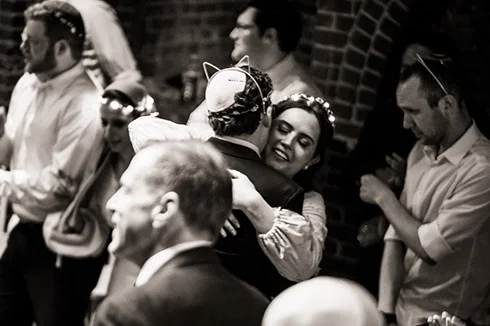
If you've never been to a full Jewish wedding, you're truly missing out. It's hard to describe the special kind of joy and celebration they always, always contain.
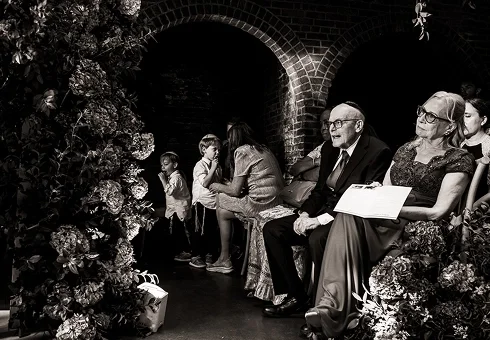
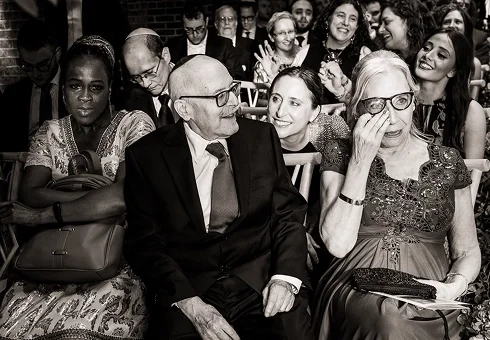
In my view, this is because every Jewish wedding is not only a celebration of two people and their families joining, but also a moment of triumph, always tinged with a drop of sorrow. Triumph that, despite all odds, the Jewish people survive, and sorrow at the remembrance of those lost along the way. You feel both in the room at once, sometimes in the same breath. It's remarkable to witness, and even more remarkable to photograph.
Why a Jewish wedding is unlike any other celebration
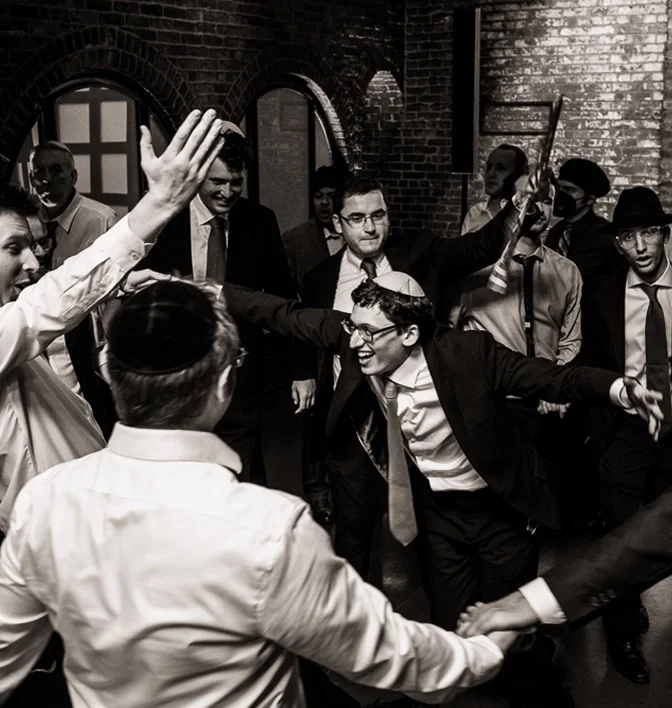
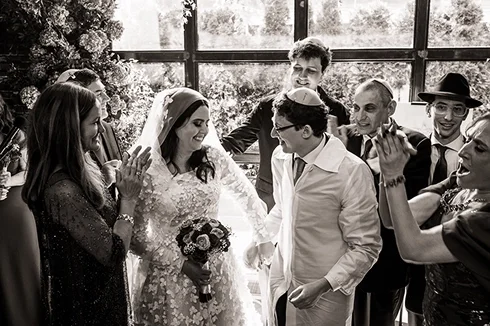
Almost every significant moment in these weddings is punctuated by singing and dancing. It isn't something relegated to the post-dinner reception on the dance floor, and it brings an unmatched level of community and togetherness.
That's the part I wish more couples understood before they hire anyone. At a Jewish wedding, the celebration doesn't wait for the party. It starts hours earlier, in a side room, with a table full of men singing over a signed document. It carries the groom down a hallway on his friends' shoulders. It surrounds the chuppah. By the time dinner is served, the room has already been dancing for half the day.
For a documentary wedding photographer, that changes everything about how you work. No "downtime" to reset a lens. The picture you're waiting for is happening behind you.
The Foundry: A Long Island City venue built for this kind of joy
The Foundry sits at 42-38 Ninth Street in Long Island City, Queens, a turn-of-the-century metal foundry with arched brick walls, a metal-beamed ceiling, and an enormous skylight overhead. The greenhouse, with light pouring through its glass ceiling onto brick, is one of the loveliest ceremony spaces in New York. There's a plant-filled courtyard, a mezzanine that gives you a second vantage point over the whole room, and a terrace looking out at the Queensboro Bridge and the Manhattan skyline behind it.
In short, it's a venue that gives a photographer options and handles a crowd of 180 people dancing without ever feeling like a ballroom. For a wedding this full of movement, that mattered.
The moments that made this day
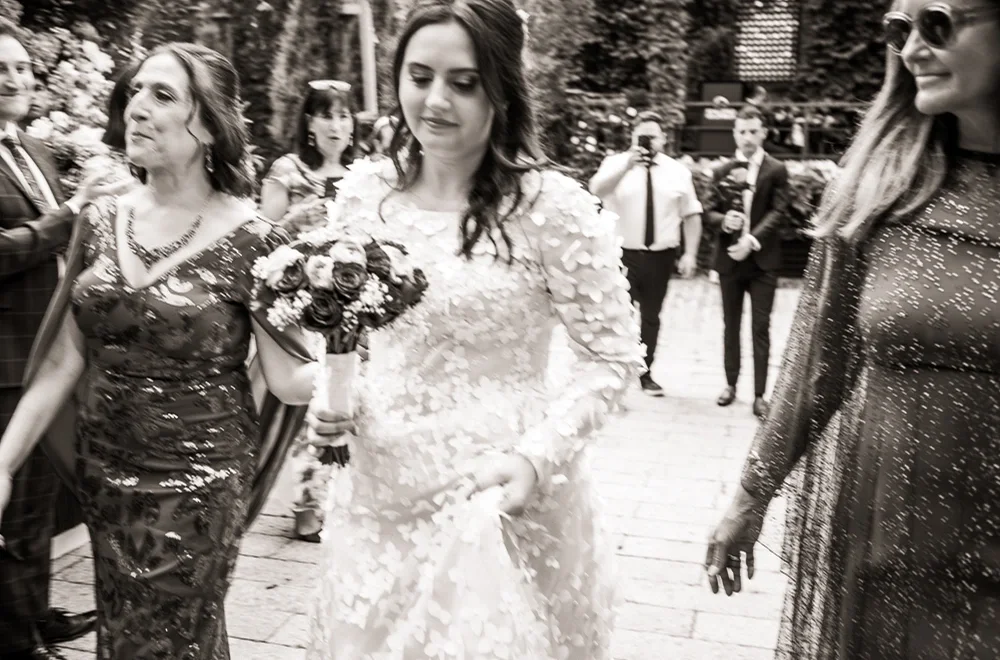
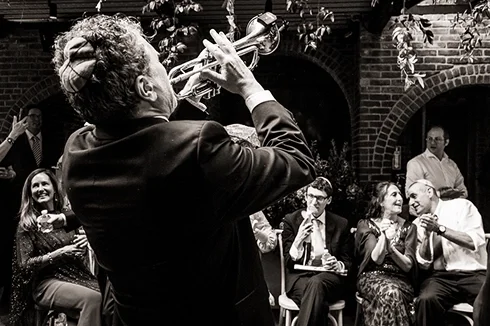
Esther-Leah and JD's wedding was a perfect example. If I recounted every special moment of this day, the blog would run for pages. Instead, I'll let the photos tell the story, as that is truly the goal of any documentary wedding photographer. But a few moments are worth naming.
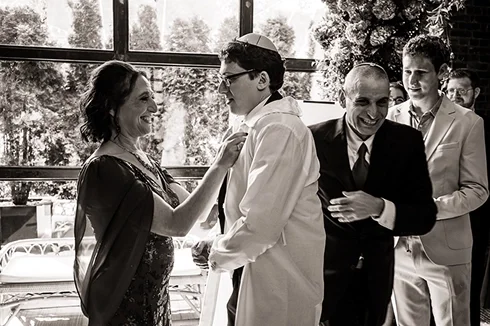
The tisch and the signing. Before anything else, the groom holds court at a table surrounded by family and friends, the ketubah is witnessed and signed, and the singing begins. It is loud, warm, slightly chaotic, and completely unposed, which is my favorite kind of room to work in.
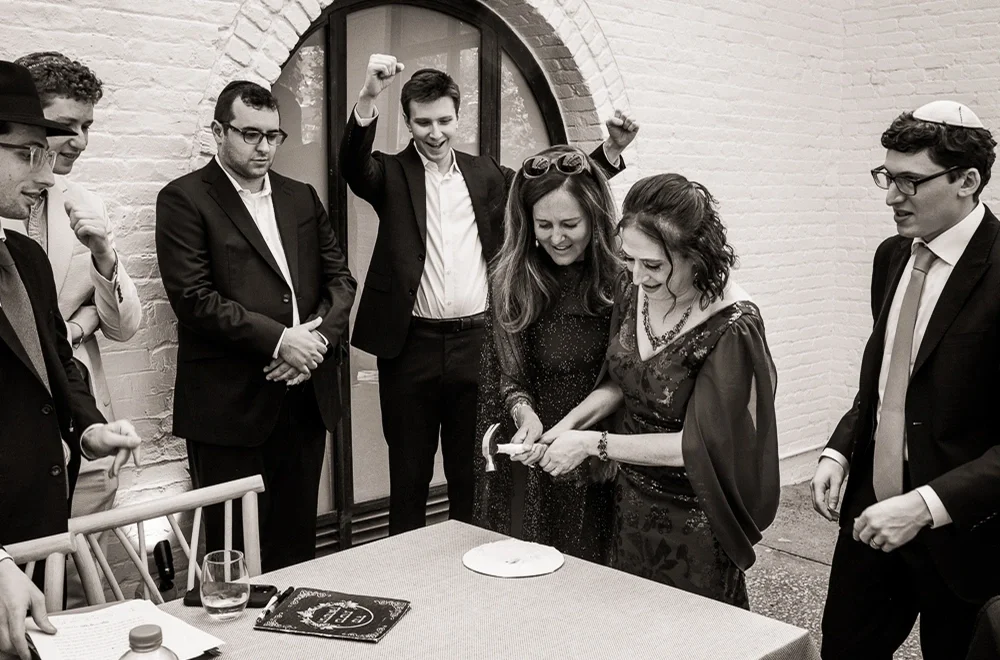
Breaking the plate. The mothers of the bride and groom broke a plate together, as is the custom, a piece of pottery shattered to mark an agreement that, once made, cannot be undone. (This is a different tradition from the glass the groom breaks at the end of the ceremony, and it's one guests often miss entirely if they're not told to look.)
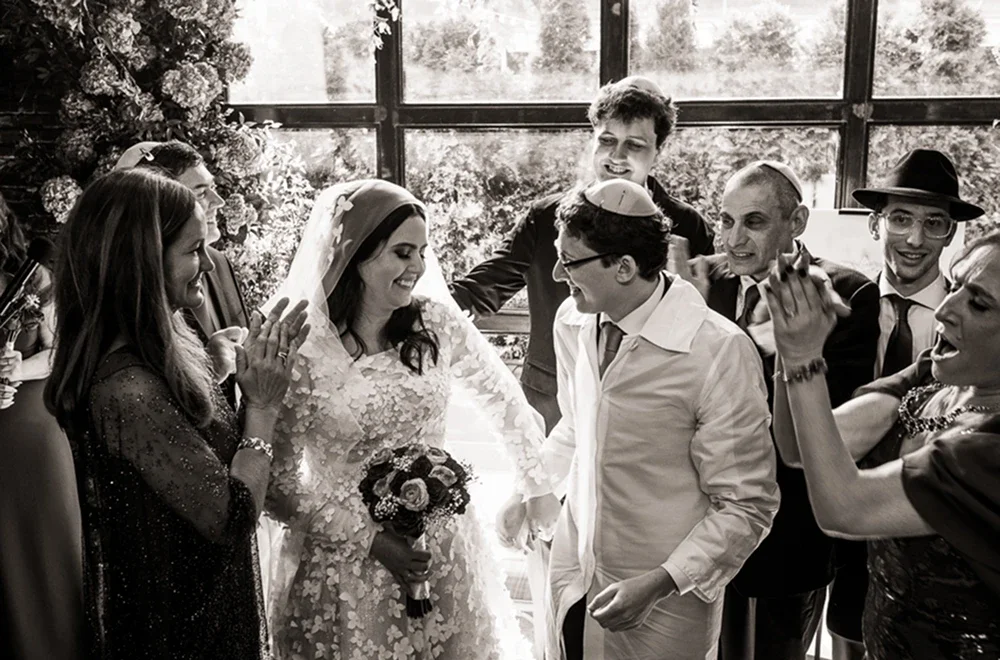
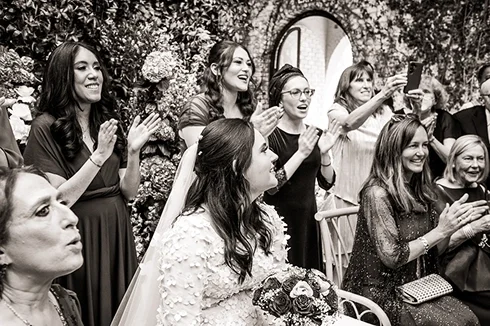
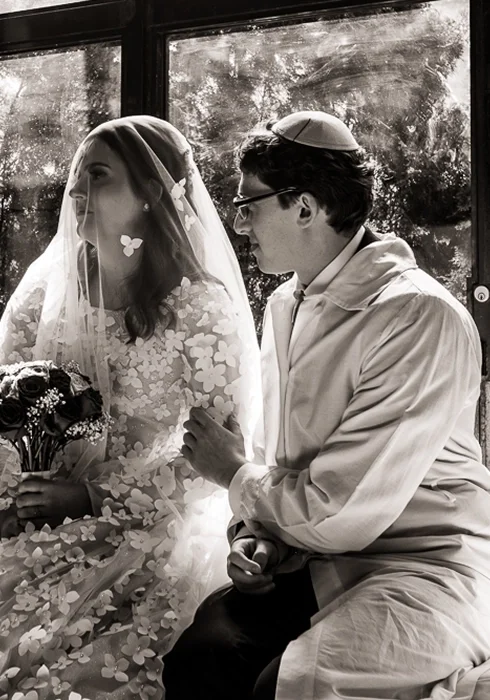
The bedeken. Then came the bedeken of the bride, when JD covered Esther-Leah's face with her veil. It takes about ten seconds. It is, reliably, one of the most emotional moments of any Jewish wedding I photograph, and the parents' faces behind the couple are usually where the real picture is. Immediately after, the groom was carried out on his friends' shoulders, amid singing, of course.
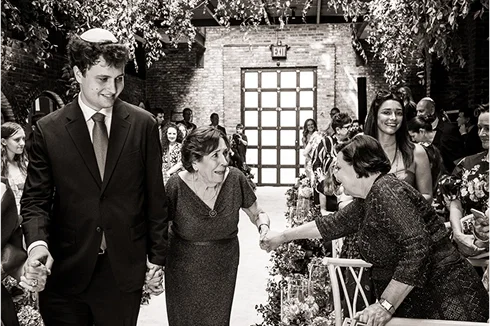
Under the chuppah. The chuppah, the canopy the couple stands beneath, open on all sides, is the visual center of the ceremony, and at The Foundry it sat under that greenhouse glass with the afternoon light coming straight down and circling, the blessings, the ring, the glass underfoot, and then the whole room shouting mazel tov at once.
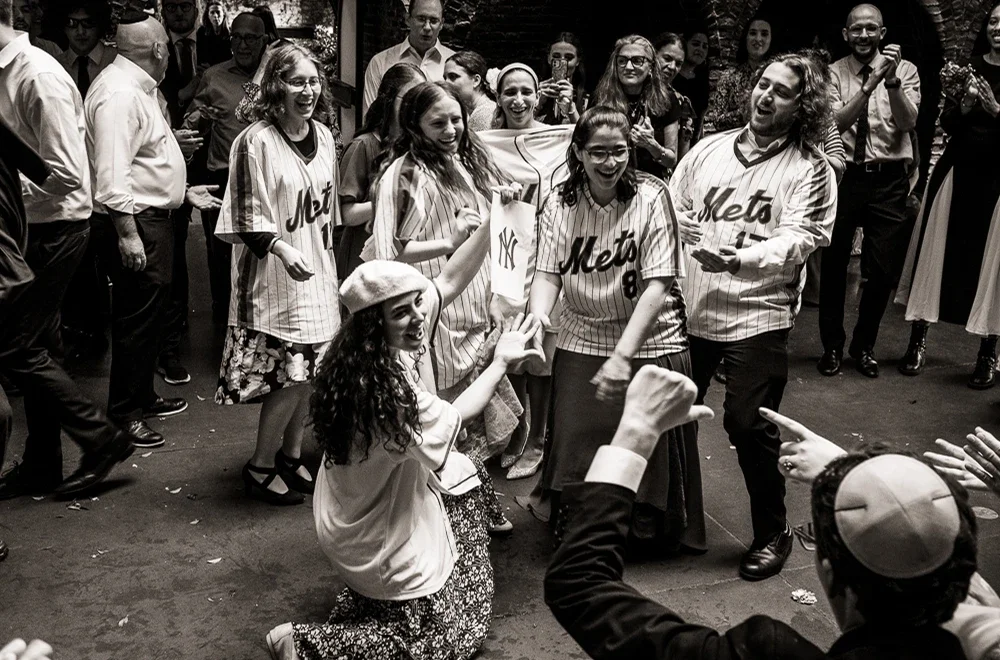
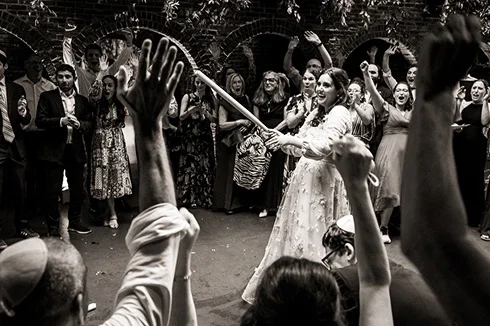
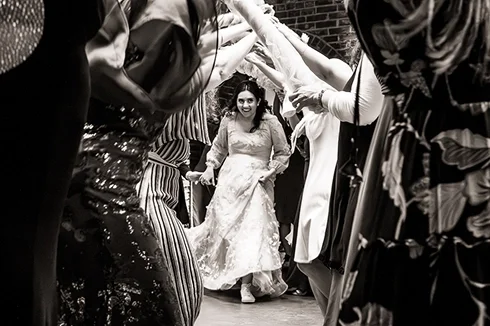
The hora. Then the dancing, which doesn't really stop. Chairs in the air, a circle that keeps widening, and every guest in the room taking a turn.
Every moment was an opportunity for laughter and raucous celebration.
I don't direct, and I don't stage. My job at a wedding like this one is to be somewhere useful, quietly, before the thing happens, which mostly means knowing the order of the day well enough to be standing in the right place when the room turns.
That's the practical argument for hiring a Jewish wedding photographer who has worked these weddings before: not that anyone needs the traditions explained to them, but that the photographer needs to know already when the ceremony is about to move, and where, and how fast.

Contact Me
If you're planning a Jewish wedding in New York and looking for photography that captures genuine moments rather than staged poses, Amy Milstein Photography would be honored to be part of your day. From the tisch and the bedeken to the last circle of the hora, Amy's documentary approach captures your wedding with honesty, artistry, and care, so you can relive every meaningful moment for years to come. Get in touch to check your date.